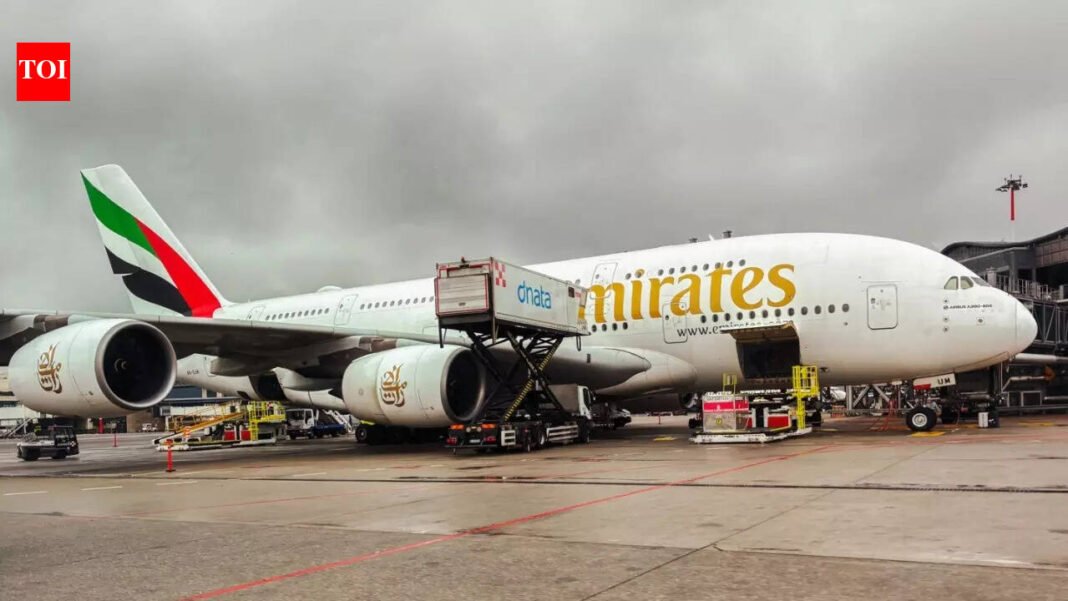
The Middle East aviation industry has begun to stabilize after a brief but significant disruption, with Emirates confirming it has resumed flight operations following a temporary grounding triggered by security concerns in the region. The airline, one of the world’s largest international carriers, has restarted flight services at Dubai International Airport after authorities cleared airspace and airport infrastructure to ensure safe operations.Early Monday morning, the Dubai Media Office reported a drone incident near Dubai International Airport, the world’s busiest airport for international passengers. According to the DMO, the incident affected a fuel tank at the airport. Emergency response teams from the Dubai Civil Defense rushed to the scene and successfully controlled the fire that broke out after the impact near the fuel storage area. The Dubai Media Office said in an update that authorities confirmed there were no reports of injuries.Emirates was forced to temporarily ground its flights after a drone-related incident near the airport led to a fire near the aviation hub. Given Dubai’s central role in connecting passengers between Asia, Europe, Africa and the Americas, the closure disrupted dozens of flights and had ripple effects across the global travel network.
Emirates resumes flights after security checks amid Iran-U.S.-Israel war
Emirates confirmed it has begun a gradual resumption of its flight schedule as airport authorities complete security checks and reopen operations at Dubai International Airport. The airline said it would initially reduce its flight schedule while it clears a backlog of delayed flights and ensures passenger safety.The temporary grounding has forced the airline to cancel or postpone several flights, affecting thousands of passengers who rely on Emirates’ extensive global network. As operations resume, travelers are advised to check flight status before traveling to the airport as flight schedules may still change during the resumption of normal operations.Industry observers point out that restarting operations for major hub airlines like Emirates requires complex coordination between airlines, air traffic controllers and airport authorities. Aircraft that were diverted or delayed during the grounding had to be relocated, and flight crews and ground staff had to adapt to the revised schedule.
Dubai’s flag carrier Emirates at the center of global aviation amid war between Iran and US-Israel
Emirates plays a pivotal role in global air travel. The airline operates hundreds of daily flights to destinations on six continents and relies heavily on Dubai International Airport as its main hub. Therefore, any disruption to airline operations could affect passengers in dozens of countries.While flights were grounded, several Emirates flights already bound for Dubai were forced to delay their arrivals or temporarily change their routes while the situation near the airport was assessed. The airline is working closely with airport authorities to ensure passenger safety while preparing to resume operations as soon as conditions permit.Travel analysts said the swift restart of flights highlighted the airline’s operational resilience. Major international airlines typically have contingency plans in place to enable rapid recovery from unexpected disruptions such as weather events, security incidents or airspace closures.
Emirates flights in Dubai suspended, passengers disrupted due to war between Iran and US-Israel
During the temporary closure, passengers traveling with Emirates experienced cancellations, delays and missed connections across the airline’s global network. Many travelers transfer through Dubai, one of the busiest international transportation hubs in the world. The airline advised affected passengers to rebook their flights via its website, mobile app or customer service channels.Emirates is also coordinating with airport authorities to manage crowds in the terminals and ensure stranded passengers receive the latest information about their travel plans. Although the grounding lasted only a few hours, the disruption highlighted the extent to which the global aviation network relies on major hub airlines such as Emirates. Due to the huge number of flights operated by Dubai International Airport through the hub every day, a single operational suspension could affect multiple continents. The incident comes as geopolitical tensions in the Middle East remain high, raising concerns about the potential impact on key transportation infrastructure in the region. Aviation authorities have strengthened security monitoring around major airports and airspace corridors to ensure the safety of commercial flights. For Emirates, maintaining uninterrupted operations is particularly important as the airline’s business model is built around connecting long-haul passengers through Dubai.Even a brief disruption can impact hundreds of subsequent flights and create logistical challenges for airline staff and passengers. Despite these challenges, Emirates emphasizes that safety remains its top priority. The airline said it will continue to work with airport authorities and regulators to ensure all flights are operated with strict safety protocols as regional conditions change.
During the war between Iran and the United States and Israel, Emirates gradually resumed normal operations in Dubai
With flight operations now resuming, Emirates is focusing on clearing delayed flights and returning to normal flight schedules. The airline expects services to stabilize in the coming hours as flight schedules return to normal and passengers complete rebooking arrangements. Travel experts say the rapid recovery demonstrates the resilience of Emirates and Dubai’s aviation infrastructure.Over the years, the airline has developed sophisticated operating systems capable of managing large-scale disruptions while maintaining passenger safety and service continuity. For travelers around the world, the resumption of Emirates flights signals a return to stability after a brief period of uncertainty. However, as geopolitical developments continue to evolve, aviation authorities and airlines in the region are likely to remain on high alert.