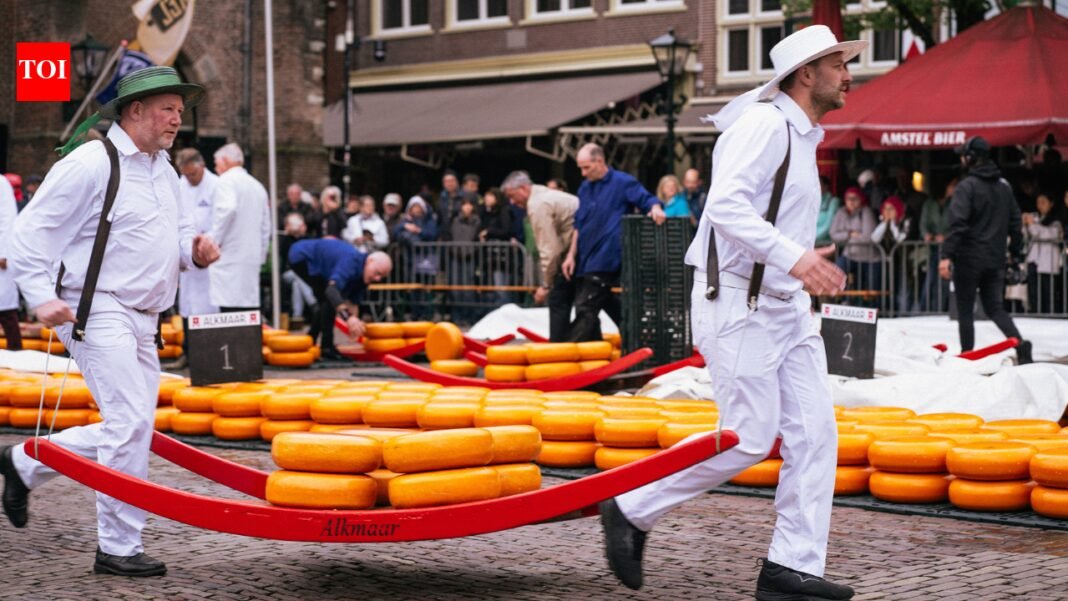
On a summer Friday in the Dutch city of Alkmaar, the smell of aged dairy products hangs in the air as wooden stretchers are dragged rhythmically across a stone square. 10 a.m. sharpThe bells rang over the historic Wagga Square and the spectacle began. Dozens of men in spotless white uniforms and straw hats trotted quickly and in synchrony, balancing heavy stretchers stacked with wheels of bright yellow cheese. It looks dramatic, almost surreal. However, what takes place every week is not a show for tourists, but a continuation of a trade ritual that has lasted for centuries.For Alkmaar, cheese is more than just food. It’s identity and history. The city’s links with the dairy trade date back to 1365, when Alkmaar first obtained the right to weigh cheese in the town. Over time, farmers, merchants and guild members turned the weekly market into one of the Netherlands’ best-known traditions. Every Friday from April to September, the market recreates the ancient rituals of haggling, weighing and transporting cheese that have shaped the city for more than six centuries.
Medieval cheese market born of trade
Long before it became a famous cultural attraction, the Alkmaar cheese market was already an important commercial center. Farmers from surrounding villages brought their cheese to the city to sell to traders who exported Dutch dairy products throughout Europe. The advent of official scales in 1365 allowed merchants to conduct business under the supervision of city authorities, ensuring that all transactions were fair.By the beginning of the seventeenth century, the cheese trade had grown so large that several scales were operating in Alkmaar. The square known as the Waagplein forms the focal point of this bustling market. During the Dutch Golden Age, thousands of cheese wheels passed through Alkmaar every year as the Netherlands became one of Europe’s major trading nations. Cheese produced in the region was transported by merchants and ships to markets across the continent.Today, the market is reviving these centuries-old practices. Everything visitors saw on Friday morning had been carefully preserved and reflected how trade once operated.
Cheese Transporters Guild
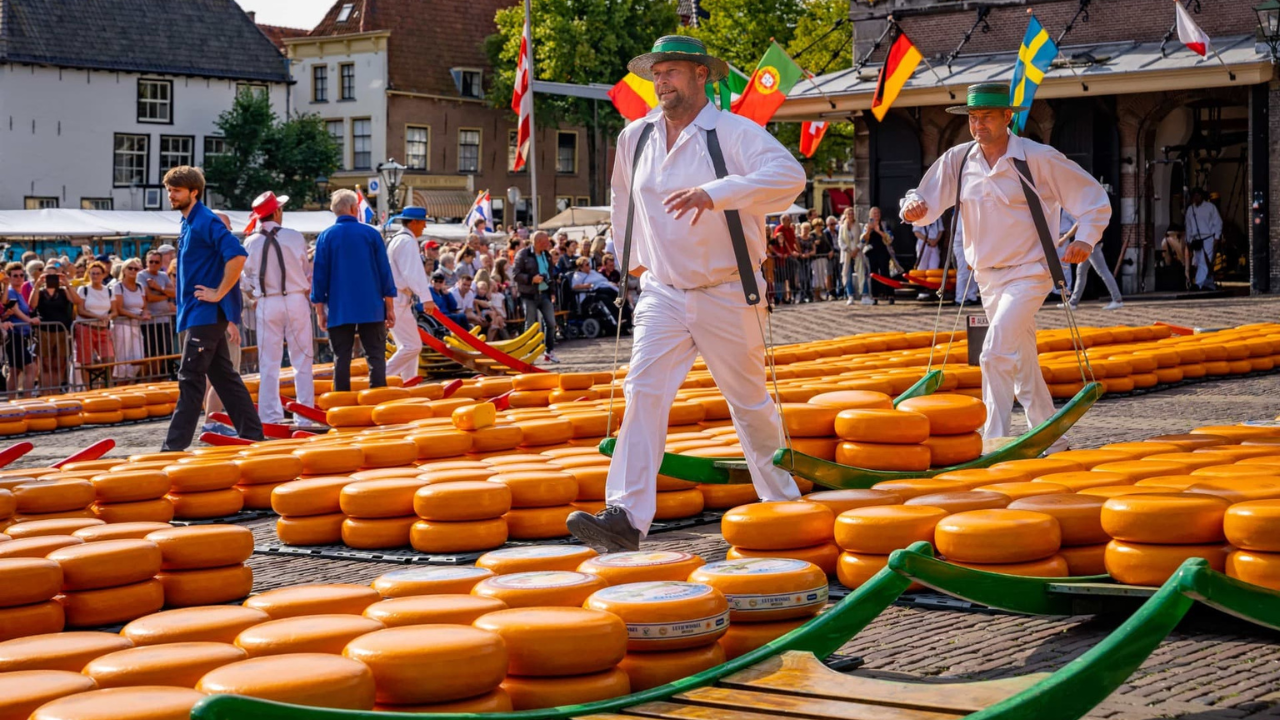
At the center of the ceremony stood the historic cheese transporters’ guild, known locally as the Kaasdragersgilde. The guild was founded in 1593 and is responsible for the transportation of cheese during the market. With limited membership, the organization still follows a strict hierarchy, reflecting its long history.Porters wear white uniforms and straw hats decorated with ribbons. The ribbons represent the four traditional teams, each with its own color. Each team has its own foreman and works together to move the heavy items to the square.Overseeing the entire operation is the ceremonial leader of the guild, often referred to as the “Father of Cheese.” Every Friday before the market starts, he calls together the carriers, confirms attendance and announces the start of the trading day. Only after this ceremony will the bells ring and the market officially begin.The guild also enforces ancient disciplinary traditions. Carriers who are late or fail to properly keep their uniforms may be fined. These rules help preserve the historic character of the event.
The run of the famous cheese transporter
The most eye-catching moments in the market are the movements of the operators themselves. Working in pairs, they lifted wooden stretchers filled with wheels of cheese. Each stretcher can hold eight large cheeses, with a total weight of around 160 kilograms.To transport goods, porters trot across the square quickly and rhythmically. This unique movement allows them to maintain stretcher balance in busy markets. The motion was both practical and ceremonial. It ensures that the cheese remains stable while also creating a spectacle that attracts tourists from around the world.Watching the carriers move in perfect coordination gives one the feeling of a brief reversal of time, returning the square to the rhythm of centuries ago.
The strange art of clapping and bargaining
Before any cheese can be moved across the square, it must be sold. The traditional bargaining ritual used in Alkmaar is called handjeklap, which roughly translates to clapping.During the negotiation process, buyers and sellers repeatedly clapped their hands while shouting out the price. Each clap represents a new offer or counteroffer. This rhythm continues until both parties agree on a price, and a final round of applause seals the deal.This lively negotiation style once determined the value of large quantities of cheese each market day. Although today’s transactions are largely symbolic, this ritual is still performed to preserve the spirit of the historical market.
Weighing Room and Fair Keepers
Once a sale is agreed upon, cheese transporters deliver the wheels to the historic weighing room, known simply as the Waag. The building dominates the Wagon Square and has been the official place where cheese was weighed and recorded for centuries.Inside the building, a weighmaster oversees the entire process to ensure the correct weight is recorded. In the early centuries, this step was crucial because merchants paid for cheese based on weight. Therefore, accuracy and honesty are crucial to maintaining trust in the market.Professional cheese inspectors also play an important role. They use metal tools to extract small samples from the cheese to check its quality, texture and flavour, then confirm it meets trading standards.
Building a Nation of Cheese
The cheeses available on the market are classic Dutch varieties such as Gouda and Edam. These cheeses became a global symbol of Dutch food culture and helped establish the country’s reputation as a center for dairy production.Over centuries, Dutch farmers perfected techniques for aging and preserving cheese, allowing it to be transported over long distances without spoiling. At the height of Dutch trading power, cheese from Dutch towns traveled across Europe and found its way to overseas markets.Even today, cheese remains deeply rooted in Dutch food and culture. The country produces hundreds of thousands of tons of cheese every year and exports it around the world.
A tradition that has lasted for centuries
Like many historical traditions, the Alkmaar cheese market faces disruption. During World War II, the market was temporarily halted due to wartime conditions and food shortages. It was restored after the war, restoring the city’s traditions that had been passed down from generation to generation.In modern times, markets have evolved into a cultural activity rather than a purely commercial one. Large crowds gather in the square every week to watch the carriers, bargaining ceremonies and weighing ceremonies.The city itself has grown into a vibrant community of more than a hundred thousand residents, but the market remains a symbol of its historical roots.
more than a market
Today, the Alkmaar cheese market is a vivid reminder of the Netherlands’ trading history. The uniforms, the clapping negotiations, the trot of the carriers and the ringing of the bells that start the market every Friday morning preserve a tradition that has lasted for more than six hundred years.For visitors, the event offers more than just the opportunity to buy cheese. It offers a glimpse into a time when markets were the centerpiece of European cities and a simple wheel of cheese could represent the prosperity of an entire region.Every Friday morning, when the bells ring out over Place de Wag and the delivery trucks begin to cross the square, Alkmaar briefly returns to its medieval rhythm.